You slept for seven or eight hours – but still feel exhausted. Or your sleep tracker shows plenty of REM sleep but very little deep sleep. Naturally, the question comes up: which one actually matters more – REM or deep sleep?
Understanding the difference between REM and deep sleep can help explain why sleep sometimes feels refreshing and other times not. These two stages serve different roles, and both are essential. The key isn’t choosing one over the other – it’s allowing your body to cycle through them naturally.
This guide breaks down REM vs deep sleep in practical terms, explains what each stage does, and shows how imbalances can affect how you feel.
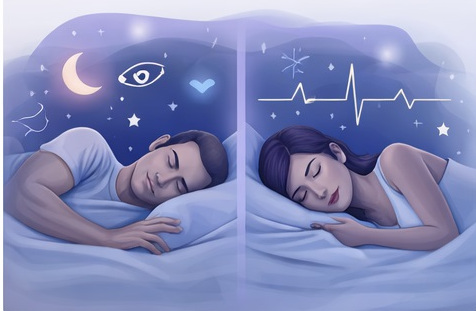
REM vs Deep Sleep: The Quick Difference
| Feature | REM Sleep | Deep Sleep |
|---|---|---|
| Brain activity | High, similar to wakefulness | Slow, synchronized waves |
| Dreams | Most vivid dreams occur | Rare or simple dreams |
| Body movement | Muscles temporarily relaxed | Some movement possible |
| Main function | Memory, emotions, learning | Physical recovery, repair |
| Timing | More in second half of night | More in first half of night |
| Ease of waking | Easier | Hardest stage to wake from |
Both stages occur multiple times each night, as part of repeating sleep cycles.
What Is Deep Sleep?
Deep sleep is often called slow-wave sleep. It’s the most physically restorative stage.
During deep sleep:
- Heart rate and breathing slow
- Blood pressure drops
- Muscles relax deeply
- Growth hormone release increases
- Tissue repair and immune support occur
This is when your body does much of its physical recovery. Missing deep sleep can leave you feeling physically tired, heavy, or groggy.
According to MedlinePlus explanation of sleep stages, deep sleep is hardest to wake from and plays an important role in feeling refreshed the next day.
What Is REM Sleep?
REM (Rapid Eye Movement) sleep is different. The brain becomes more active, while the body temporarily relaxes most muscles.
During REM sleep:
- Most vivid dreaming occurs
- Brain processes emotions
- Memories are consolidated
- Learning is reinforced
- Creativity and problem-solving may improve
REM sleep increases later in the night. Cutting sleep short – for example by waking early – often reduces REM sleep more than deep sleep.
The Mayo Clinic overview of sleep stages notes that REM sleep supports cognitive function and emotional regulation.
Which Is More Important: REM or Deep Sleep?
This is one of the most common questions – and the answer is: both matter, but in different ways.
Deep sleep supports:
- Physical restoration
- Immune function
- Energy recovery
REM sleep supports:
- Mental clarity
- Mood regulation
- Memory and learning
If you lack deep sleep, you may feel physically drained.
If you lack REM sleep, you may feel mentally foggy or emotionally sensitive.
Neither stage replaces the other.
Why Sleep Cycles Matter More Than One Stage
Sleep naturally cycles:
Light sleep → deep sleep → REM → repeat
You typically get:
- More deep sleep early in the night
- More REM sleep in the early morning
This means:
- Going to bed late may reduce deep sleep
- Waking too early may reduce REM sleep
- Fragmented sleep disrupts both
The American Academy of Sleep Medicine sleep cycle overview explains that repeated cycles are essential for balanced sleep function.
Signs You Might Be Missing Deep Sleep
You may be low on deep sleep if you:
- Wake feeling physically heavy
- Feel unrefreshed despite enough hours
- Experience daytime fatigue
- Feel sore after normal activity
Common contributors:
- Alcohol before bed
- Late-night exercise
- Stress
- Irregular sleep schedule
- Sleep apnea
Signs You Might Be Missing REM Sleep
Low REM sleep may show up as:
- Mental fog
- Difficulty concentrating
- Mood swings
- Increased anxiety
- Frequent early awakenings
REM sleep is particularly sensitive to:
- Sleep deprivation
- Alarm interruptions
- Late-night screen exposure
- Irregular bedtime
What Reduces Both REM and Deep Sleep
Some factors interfere with both stages:
- Frequent nighttime awakenings
- Chronic stress
- Caffeine late in the day
- Alcohol
- Poor sleep environment
- Shift work
- Certain medications (varies)
This is why improving overall sleep quality often improves both REM and deep sleep together.
Practical Checklist: Support Both REM and Deep Sleep Tonight
You don’t need to target one stage specifically. Instead, focus on sleep continuity:
- Go to bed at a consistent time
- Allow enough total sleep opportunity
- Avoid alcohol before bed
- Limit caffeine after mid-afternoon
- Reduce light exposure at night
- Get morning daylight exposure
- Avoid checking the clock during awakenings
These habits help your body cycle naturally.
You may also benefit from related Sleep Aid Research topics such as:
- improving deep sleep
- why you wake up tired
- how to fix your sleep schedule
- waking up during the night
Do Sleep Trackers Measure REM and Deep Sleep Accurately?
Consumer sleep trackers estimate stages using movement and heart rate. They can show patterns but aren’t perfectly precise.
Use them to:
- Observe trends over time
- Spot schedule changes
- Identify sleep fragmentation
Avoid focusing on single-night numbers. Sleep varies naturally.
When to Seek Medical Advice
Consider professional evaluation if:
- You feel persistently exhausted despite enough sleep
- You snore loudly or stop breathing during sleep
- You wake frequently every night
- Daytime sleepiness affects safety
- Sleep problems last several weeks
Conditions like insomnia or sleep apnea can disrupt both REM and deep sleep.
The Bottom Line
REM vs deep sleep isn’t a competition. Deep sleep restores the body, while REM sleep restores the mind. Healthy sleep includes both, cycling naturally throughout the night. When sleep becomes fragmented or shortened, the balance shifts – and you may feel the difference.
Instead of chasing one stage, focus on consistent, uninterrupted sleep. That’s what allows your brain and body to do their work.
FAQ
Is deep sleep more important than REM sleep?
No. Deep sleep supports physical recovery, while REM sleep supports mental and emotional processing. Both are necessary.
Which comes first, REM or deep sleep?
Deep sleep occurs earlier in the night, while REM sleep becomes longer toward morning.
Can you have too much REM sleep?
Natural variation occurs, but excessive REM relative to total sleep may happen with sleep deprivation recovery or certain medications.
Why do I get more REM sleep when I sleep longer?
REM cycles lengthen later in the night, so longer sleep increases REM time.
Does age affect REM and deep sleep?
Yes. Deep sleep generally decreases with age, while REM sleep changes more gradually.