
Introduction
If you have ADHD and struggle to fall asleep, stay asleep, or wake up feeling rested, you’re not alone. Sleep problems are extremely common in people with attention-deficit/hyperactivity disorder-and they often feel confusing, frustrating, and hard to fix.
You might feel wired at night but exhausted during the day. Or notice your sleep schedule drifting later and later, no matter how tired you are.
This article explains why sleep and ADHD are so closely connected, what might be happening in your body and brain, and-most importantly-what you can realistically do to improve your sleep.
ADHD isn’t just about focus or hyperactivity during the day. It also affects how the brain regulates arousal, timing, and behavior-key systems involved in sleep.
Many people with ADHD experience:
- Difficulty “switching off” at night
- Delayed sleep timing (falling asleep very late)
- Restless or fragmented sleep
- Trouble waking up in the morning
- Daytime fatigue despite enough time in bed
Research suggests that ADHD is linked to disruptions in circadian rhythms (your internal body clock) and differences in how the brain manages alertness and dopamine signaling. This can make sleep feel unpredictable or out of sync with your schedule.
According to the National Institute of Mental Health overview of ADHD, sleep issues are commonly reported alongside core ADHD symptoms, especially in adolescents and adults.
Common Sleep Problems in ADHD
1. Delayed Sleep Phase (Night Owl Pattern)
One of the most frequent patterns is a natural tendency to fall asleep much later than expected-often 1-3 a.m. or later.
This isn’t just “bad habits.” In many cases, the body’s internal clock is shifted later, making it hard to feel sleepy at conventional times.
2. Racing Thoughts at Night
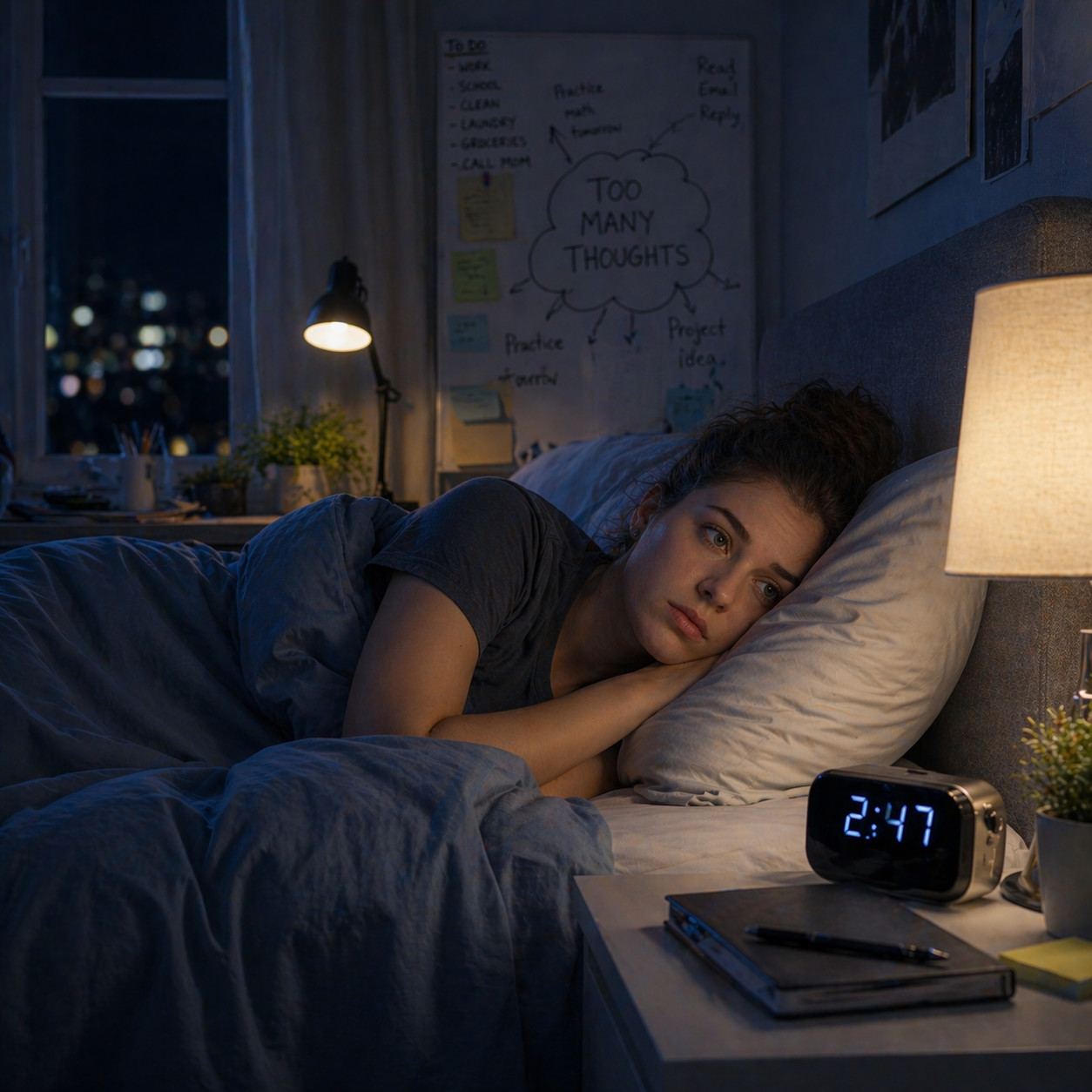
ADHD often comes with mental hyperactivity. At night, when external distractions fade, thoughts can become louder and harder to control.
This can look like:
- Replaying conversations
- Jumping between ideas
- Planning or worrying
- Getting stuck in “mental loops”
If you’ve ever searched for “how to stop overthinking at night,” this overlap is very real.
3. Inconsistent Sleep Schedule
People with ADHD often struggle with routine and time awareness. That can lead to:
- Irregular bedtimes
- Late-night hyperfocus sessions
- Sleeping in on some days, not others
Over time, this inconsistency can worsen sleep quality.
4. Difficulty Winding Down
Transitioning from activity to rest is a known challenge in ADHD. Even if you’re physically tired, your brain may still feel “on.”
This is partly related to executive function differences-your brain doesn’t easily shift gears.
The Brain Connection: Why Sleep Feels Different
ADHD affects several systems that directly influence sleep:
Dopamine and Arousal
Dopamine plays a role in motivation, attention, and reward-but also in wakefulness. ADHD involves differences in dopamine regulation, which may contribute to feeling under-stimulated during the day and overstimulated at night.
Circadian Rhythm Delays
Some people with ADHD have a naturally delayed melatonin release (the hormone that signals sleep). That means your body simply isn’t ready for sleep when you want it to be.
Hyperfocus
While ADHD is often associated with distraction, it can also involve intense focus-especially on stimulating activities like gaming, scrolling, or working late.
That can push bedtime later without you noticing.
ADHD Medications and Sleep
Stimulant medications (such as methylphenidate or amphetamines) can affect sleep-but not always in the way people expect.
Possible Effects
- Too late dosing – difficulty falling asleep
- Wearing off at night – rebound restlessness or irritability
- Proper timing – sometimes improves sleep by stabilizing daytime symptoms
There’s no single pattern. Some people actually sleep better once ADHD symptoms are managed.
The key is timing and individual response. If sleep worsens after starting or adjusting medication, it’s worth discussing with a healthcare professional.
For general medication safety, see MedlinePlus guidance on ADHD treatment.
What You Can Try Tonight (Realistic Steps)
Improving sleep with ADHD isn’t about perfect discipline-it’s about reducing friction.
1. Set a “Wind-Down Trigger”
Instead of relying on willpower, use a consistent cue:
- Alarm 60-90 minutes before bed
- Specific activity (shower, dim lights, tea)
- Same sequence every night
The goal is to train your brain that sleep is coming.
2. Reduce Stimulation Gradually
Going from high stimulation to “try to sleep now” rarely works.
Try:
- Lowering screen brightness
- Switching from fast-paced content to slower formats
- Avoiding emotionally intense tasks late at night
3. Use Light to Shift Your Schedule
Light is one of the strongest signals for your body clock.
- Bright light in the morning (ideally outdoors)
- Dim lighting in the evening
This helps nudge your sleep timing earlier over time.
4. Externalize Your Thoughts
If your mind races, don’t fight it internally.
Try:
- Writing a quick “brain dump”
- Making a next-day list
- Parking worries on paper
This can reduce the mental pressure at bedtime.
5. Be Careful With Late Hyperfocus
Late-night productivity can feel rewarding-but it often comes at the cost of sleep.
If you notice this pattern, consider:
- Setting a cutoff time for engaging tasks
- Using app blockers or timers
- Saving stimulating activities for earlier in the day
When Sleep Problems Might Need More Support
Some sleep issues go beyond typical ADHD patterns.
Consider seeking medical advice if you have:
- Persistent insomnia lasting weeks or months
- Loud snoring, gasping, or pauses in breathing (possible sleep apnea)
- Severe daytime sleepiness
- Restless legs or frequent nighttime awakenings
Sleep disorders can overlap with ADHD and may need separate treatment.
ADHD vs. Other Sleep Conditions
Some symptoms can look similar but have different causes.
| Symptom | ADHD-related sleep issue | Possible other condition |
|---|---|---|
| Late sleep timing | Delayed circadian rhythm | Delayed Sleep Phase Disorder |
| Nighttime restlessness | Mental hyperactivity | Restless Legs Syndrome |
| Daytime fatigue | Poor sleep quality | Sleep apnea or insomnia |
If something feels “off” beyond typical patterns, it’s worth exploring further.
Key Takeaways
- Sleep problems are very common in ADHD and often tied to brain regulation, not just habits
- Delayed sleep timing and racing thoughts are among the most frequent challenges
- Medication can affect sleep, but effects vary widely
- Small, consistent changes often work better than strict routines
- Persistent or severe symptoms should be evaluated professionally
FAQ
Why do people with ADHD stay up so late?
Many have a delayed circadian rhythm, meaning their body naturally feels alert later at night. Combined with mental stimulation and hyperfocus, bedtime often gets pushed back.
Does ADHD cause insomnia?
It can contribute to insomnia, especially difficulty falling asleep. However, insomnia can also exist separately and may need its own treatment.
Can melatonin help with ADHD sleep issues?
Melatonin may help shift sleep timing in some cases, especially delayed sleep phase. However, it should be used carefully and ideally with medical guidance, especially for long-term use.
Do ADHD medications always make sleep worse?
Not always. While they can interfere with sleep if taken too late, they may also improve sleep by reducing daytime symptoms and evening restlessness.
Is it possible to fix sleep with ADHD?
Improvement is possible, but it often requires tailored strategies rather than standard sleep advice. Consistency, timing, and reducing stimulation are key.