Introduction
If you’re lying in bed tired but unable to fall asleep-or waking up feeling like you barely rested-you’re not alone. Many sleep problems don’t come from a single medical condition, but from small daily habits that quietly disrupt the body’s natural rhythm This is where sleep hygiene comes in.
A good sleep hygiene guide isn’t about rigid rules or perfection. It’s about understanding how your environment, routine, and behavior shape your ability to fall asleep and stay asleep. In this guide, we’ll walk through what sleep hygiene really means, why it matters, and what you can realistically change starting tonight.
What Is Sleep Hygiene (and Why It Matters)
Sleep hygiene refers to the set of habits and environmental factors that influence sleep quality. It includes things like your bedtime routine, light exposure, caffeine use, and even how you use your bed.
Poor sleep hygiene doesn’t always cause insomnia on its own-but it often makes existing sleep problems worse or harder to fix.
According to the National Heart, Lung, and Blood Institute’s overview of insomnia, behavioral and environmental factors are a core part of managing sleep difficulties, especially long-term.
In other words, even if your sleep issues feel complex, the basics still matter.
Common Signs Your Sleep Hygiene Needs Improvement
Not everyone recognizes poor sleep hygiene right away. It often shows up as patterns rather than a single symptom.
You might notice:
- Trouble falling asleep despite feeling tired
- Waking up multiple times during the night
- Feeling unrefreshed in the morning
- Needing caffeine just to function
- Irregular sleep and wake times
- Falling asleep easily but waking too early
These patterns are often discussed in our related guide on waking up during the night, which can overlap strongly with lifestyle factors.
The Most Common Sleep Hygiene Mistakes
Many sleep disruptions come from habits that feel harmless-or even helpful.
1. Inconsistent Sleep Schedule
Going to bed at different times every night confuses your internal clock (circadian rhythm). Even a few hours’ difference can make falling asleep harder.
2. Too Much Light at Night
Screens, overhead lighting, and even bright bathroom lights can suppress melatonin-the hormone that signals your body it’s time to sleep.
Research summarized by the Centers for Disease Control and Prevention on sleep and circadian rhythms highlights how light exposure directly affects sleep timing.
3. Using the Bed for Everything
Scrolling, working, eating, or watching shows in bed trains your brain to associate the bed with wakefulness instead of sleep.
4. Late Caffeine or Alcohol
- Caffeine can stay in your system for several hours
- Alcohol may make you sleepy initially, but often fragments sleep later in the night
5. Trying Too Hard to Sleep
Ironically, forcing sleep often backfires. Anxiety about sleep can become a major driver of insomnia. This is explored further in our topic on sleep anxiety.
What Good Sleep Hygiene Actually Looks Like
Improving sleep hygiene doesn’t mean changing everything at once. It’s about consistent, realistic adjustments.
A Stable Sleep-Wake Routine
- Go to bed and wake up at the same time daily (even weekends, if possible)
- Avoid “catching up” on sleep with long morning lie-ins
A Wind-Down Period
Give your brain a signal that sleep is approaching:
- Dim lights 30-60 minutes before bed
- Avoid stimulating activities
- Try calm routines (reading, stretching, quiet music)
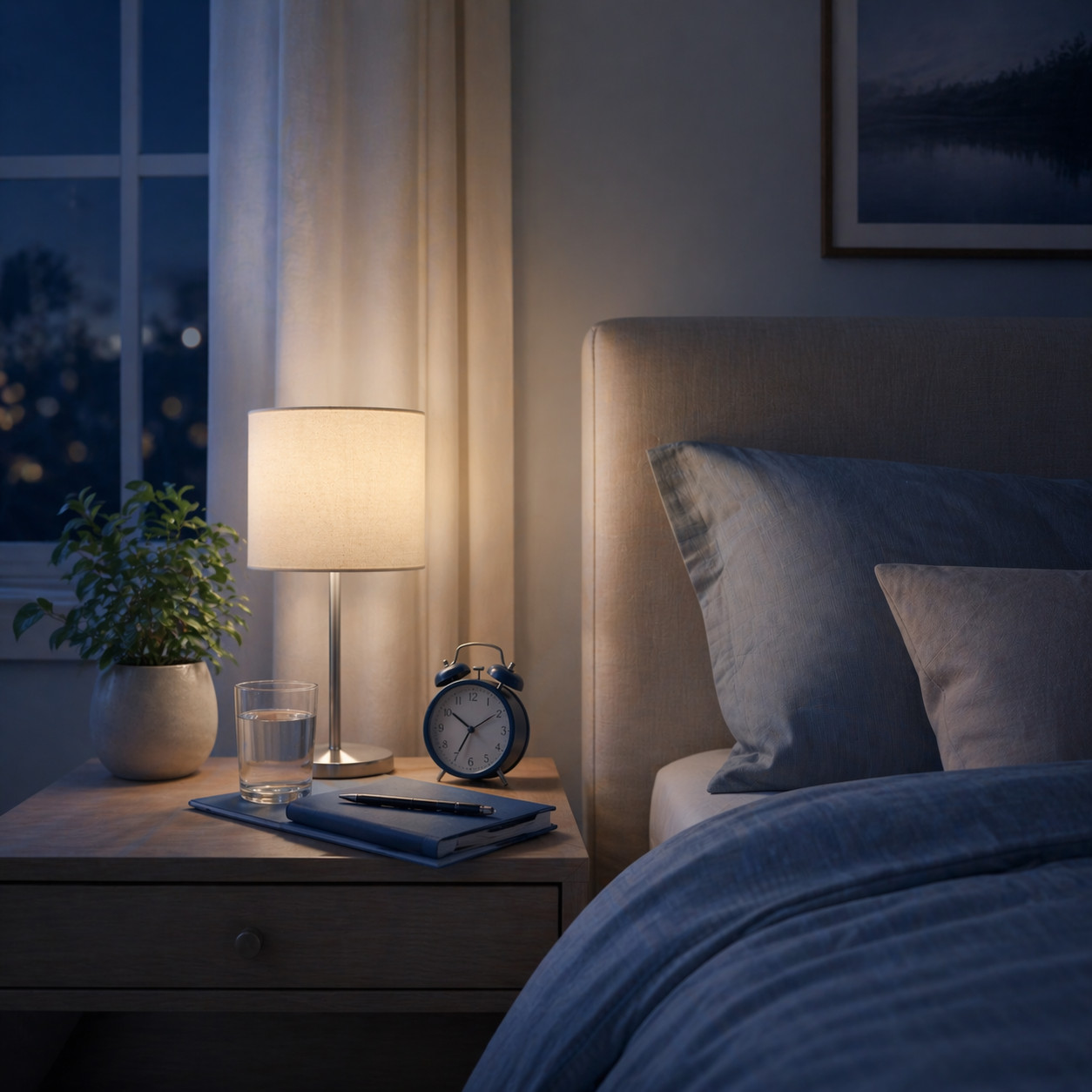
A Sleep-Friendly Environment
Your bedroom should support sleep, not fight it:
- Cool temperature (slightly cooler than daytime comfort)
- Minimal noise or consistent background sound
- Darkness (consider blackout curtains if needed)
Light Exposure During the Day
Morning light helps regulate your circadian rhythm:
- Get natural light early in the day if possible
- Avoid staying indoors all day without daylight
Limiting Stimulants
- Avoid caffeine in the late afternoon and evening
- Be cautious with nicotine and alcohol close to bedtime
What to Do Tonight (Simple Reset Plan)
If your sleep has been off, you don’t need a full overhaul. Start with a few focused steps.
Tonight, try this:
- Choose a realistic bedtime (not just “early”)
- Stop screen use 30 minutes before bed
- Dim your lights
- Avoid checking the clock repeatedly
- If you can’t sleep after ~20 minutes, get up and do something calm in low light
These small changes often reduce the “pressure” around sleep, which is a major hidden factor in insomnia.
When Sleep Hygiene Alone Isn’t Enough
Sleep hygiene is powerful-but it’s not a cure-all.
If your sleep problems persist despite consistent habits, there may be other factors involved:
- Chronic insomnia
- Sleep apnea
- Anxiety or depression
- Restless legs syndrome
- Shift work or circadian rhythm disorders
In these cases, structured approaches like cognitive behavioral therapy for insomnia (CBT-I) are often recommended. The American Academy of Sleep Medicine highlights behavioral therapies as first-line treatment for chronic insomnia.
Red Flags: When to Seek Medical Advice
Consider speaking with a healthcare professional if you experience:
- Sleep problems lasting more than a few weeks
- Loud snoring with pauses in breathing
- Severe daytime sleepiness
- Frequent early morning awakenings with low mood
- Dependence on alcohol or medication to sleep
Sleep issues are common-but persistent or severe symptoms deserve proper evaluation.
Key Takeaways
Sleep hygiene isn’t about perfection-it’s about consistency.
Most people don’t need extreme changes. They need better alignment between their habits and their biology.
Start small. Keep it realistic. And give your body time to adjust.
FAQ
What is the most important sleep hygiene habit?
Consistency. Going to bed and waking up at the same time daily is one of the most effective ways to stabilize sleep.
How long does it take to fix sleep hygiene?
Some people notice improvements within a few days, but meaningful changes often take 1-2 weeks of consistent habits.
Can sleep hygiene cure insomnia?
Not always. It helps significantly, but chronic insomnia often requires additional treatment like CBT-I.
Is it bad to use your phone before bed?
Yes, especially in bright light or engaging content. It can delay sleep onset and reduce sleep quality.
Should I stay in bed if I can’t sleep?
Usually no. Getting out of bed briefly helps prevent your brain from associating the bed with wakefulness.